<img height="1" width="1" style="display:none" src="https://www.facebook.com/tr?id=1446880727106160&amp;ev=PageView&amp;noscript=1">
Dairy Industry

Greener plants, stronger profits

Minimise product losses, reduce energy consumption, and unlock your plant’s full potential with liquid process intelligence.
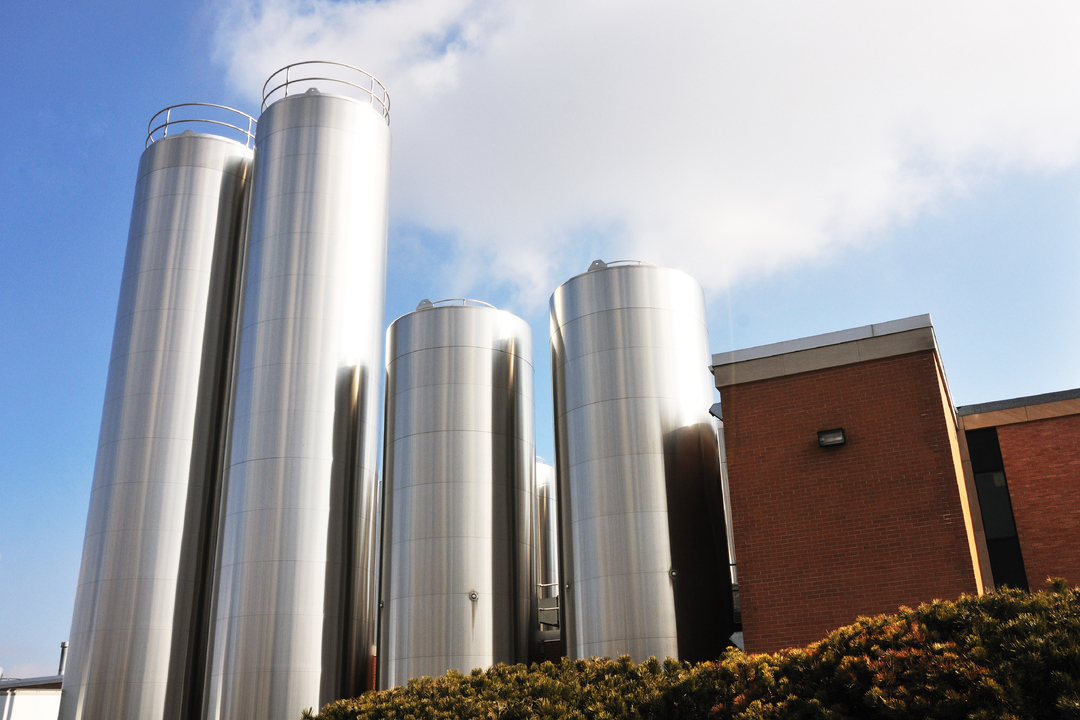
Dairy plant-1
Industry Challenges

Hidden costs of dairy process inefficiencies

Dairy producers face pressure to drive efficiency and meet tough sustainability targets. But behind every unoptimised process lies a quiet cost, draining resources, spiking emissions, and eroding margins.

Collo's impact assessment puts what a typical European dairy could recover at about 750,000 litres of product and 5,500 m³ of cleaning water a year. Add energy waste, CO₂ emissions, and growing wastewater fees, and the impact becomes clear: inefficiency is your silent competitor.

The loss calculator puts a number on it: how much product your plant is losing and what it is costing you.

Cows on green grass near a body of water in the morning or evening -  iStock-938105398-1
Key issues
6%
Product losses:
Industry losses run at 2–6% of intake, much of it at changeovers and transitions. For a plant processing 100 million litres a year, every percentage point is 1 million litres, worth about 500K € at 0.50 €/litre.
20%
Excessive resource use:
Fixed-time CIP programs run longer than needed, using 15–20% more water, chemicals and energy than the cleaning actually requires.
5k € / h
Unplanned downtime:
Typical Cost: Ranges from 1000–5000 € per hour, depending on production line and batch size. Plants experiencing even 100 hours of downtime/year could lose 100–500K € annually.
CO2
Environmental impact:
Pasteurisation and cleaning make dairy one of the most energy- and water-intensive food sectors, and the cost of carbon keeps rising under the EU Green Deal.

Let’s turn every drop into value

With precise, actionable insights and seamless automation, we transform everyday inefficiencies into measurable value. Our platform empowers dairy producers to eliminate waste, boost profitability, and drive sustainability.

Changeover Optimisation

Stop losing product, start maximising profit

Every changeover can quietly drain profits. Lost dairy product is a “double whammy”, you lose the product and then pay extra in the wastewater treatment, but not on our watch.

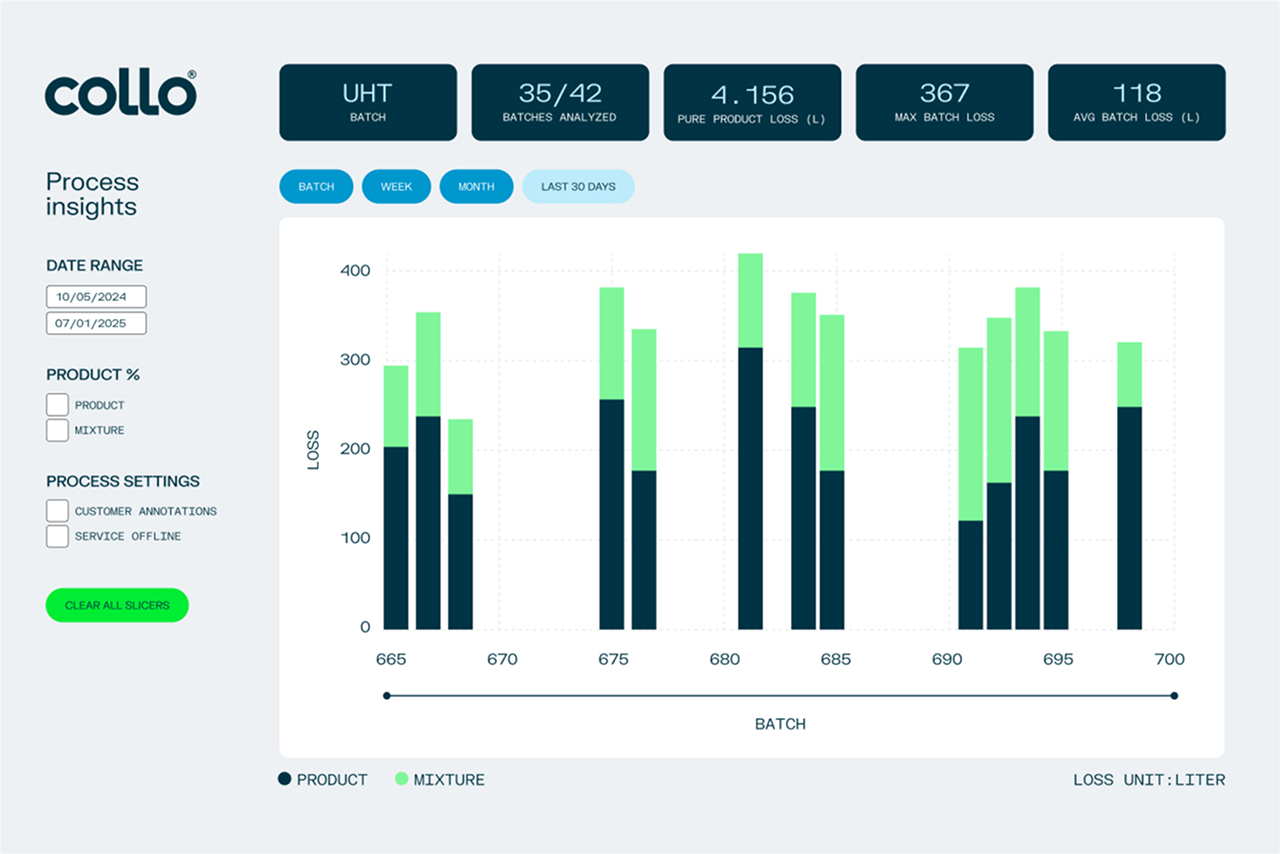
Collo pinpoints hidden losses with real-time precision, instantly transforming waste into measurable value.

Cut product loss, improve yield, and hit your sustainability goals with confidence. With Collo, invisible waste becomes visible profit.
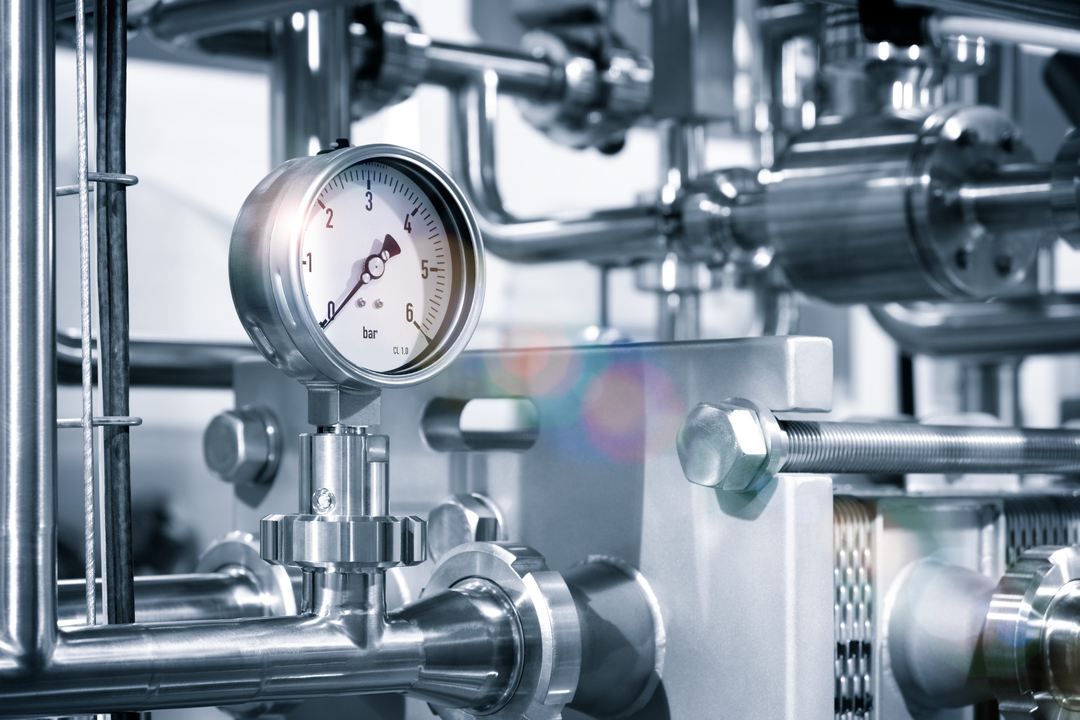
pressure meter in a liquid processing plant - iStock-1208602762-1
CIP Optimisation

Overcleaning is overcostly

More cleaning isn't better. Smarter cleaning is. Collo’s CIP optimisation gives clear, instant visibility into every rinse and chemical cycle. Shorten cleaning durations, slash unnecessary chemical, water, and energy use, and reclaim valuable production hours every week. Effortless efficiency and measurable savings every time.
A stream of clean water flows into the stainless steel sink - AdobeStock_1067462546 small
Real-Time Process Control

Instant decisions, maximum efficiency

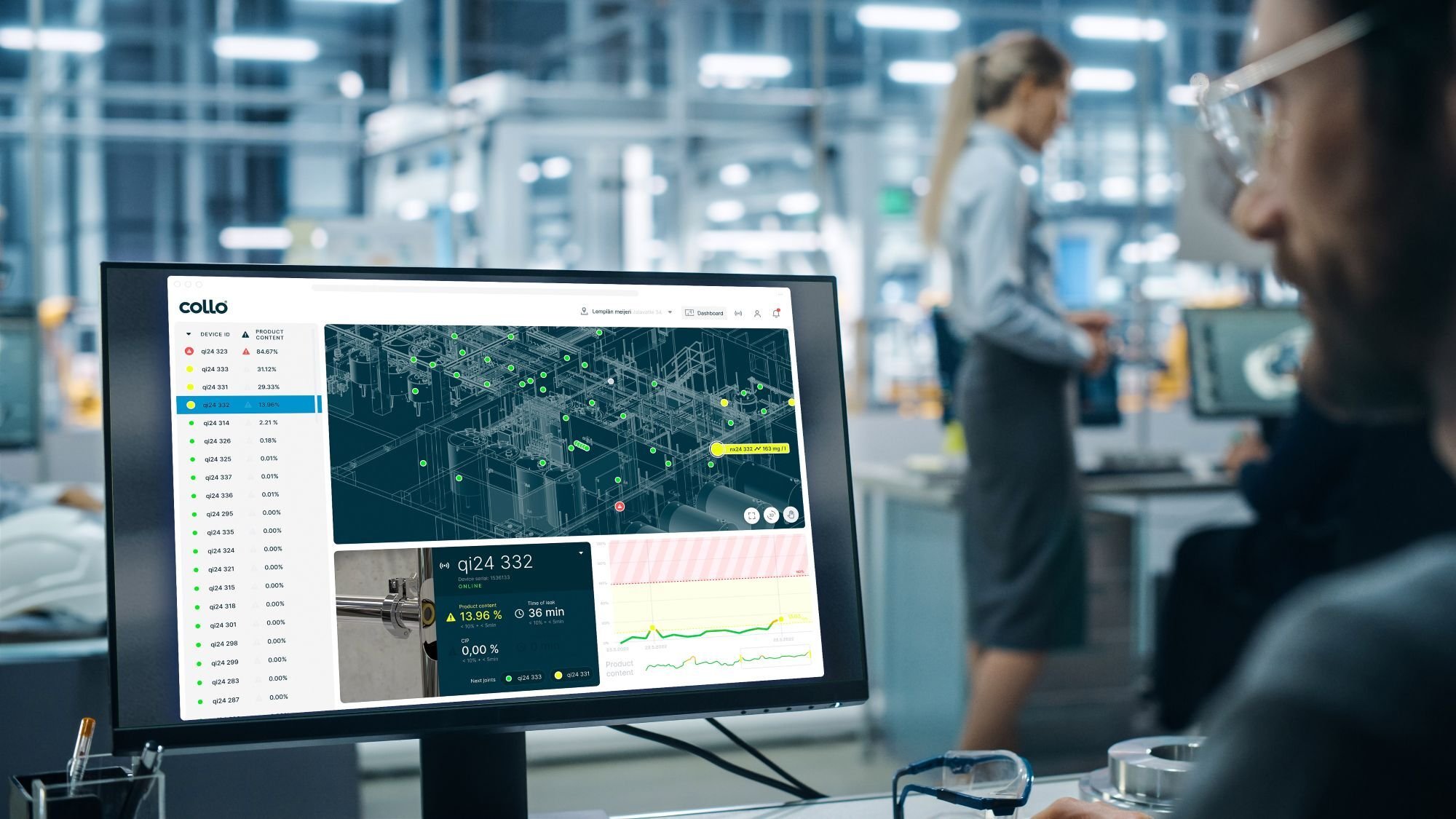
Real-time data isn't useful if it doesn't trigger action. Collo Signals integrates seamlessly with your plant’s automation, turning complex data into automatic, precise adjustments. Enhance productivity, yield, and sustainability instantly.
Collo-diary-desktop-2025
Features

Key features of our platform

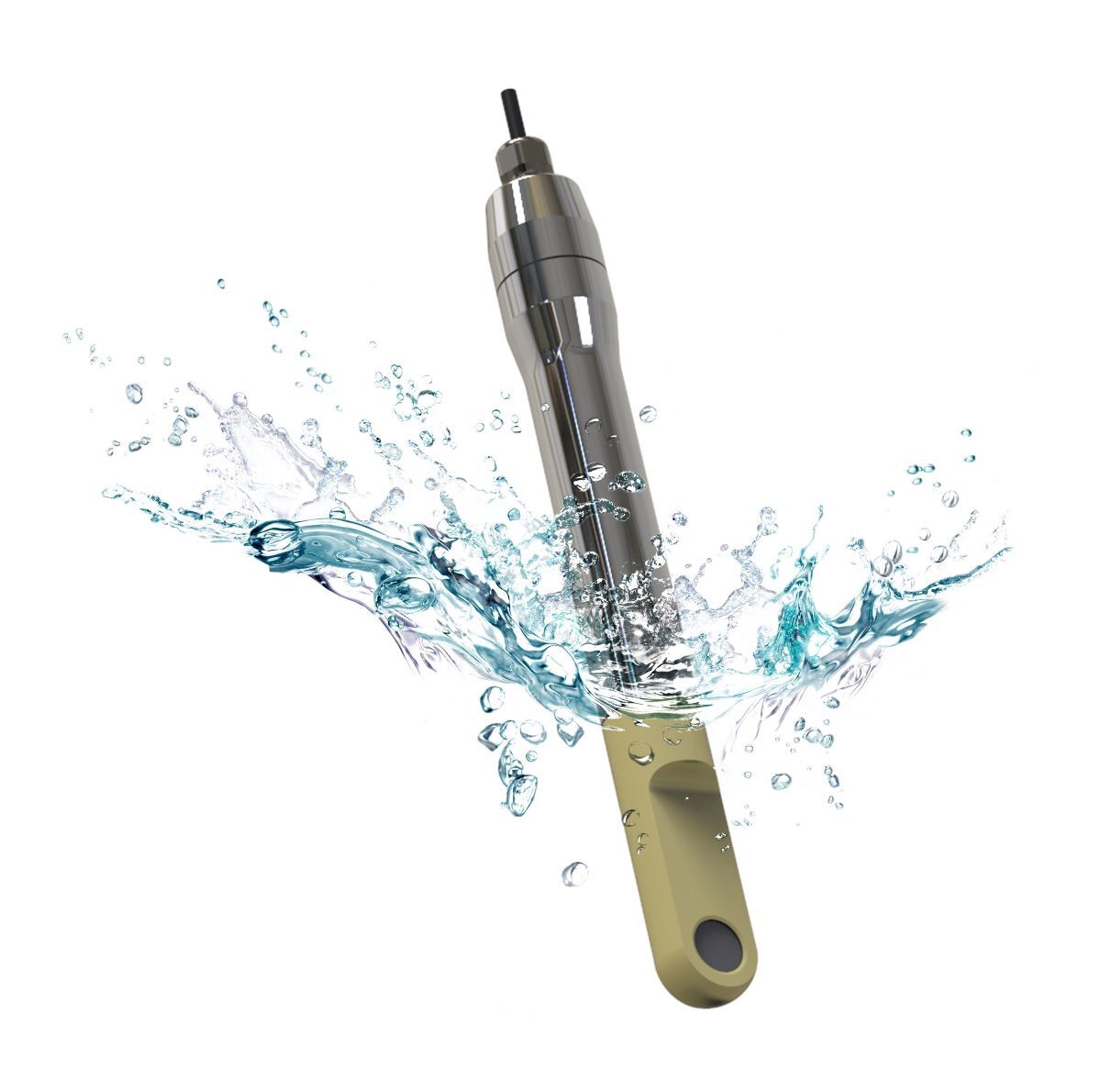
Collo is built for all dairy liquids, from raw milk to whey, cream, and yogurt. Continuously analysing liquid composition, immediately detecting even the slightest change or deviation. Seamlessly integrated into your existing plant setup, Collo delivers insights without interrupting production. With precise, actionable data at your fingertips, optimising your process becomes effortless, empowering you to boost efficiency, cut costs, and strengthen your sustainability impact.

Changeover optimisation

  • Detect product/water interfaces in real-time
  • Prevent product loss with precise valve control
  • Prevent excess wastewater treatment costs

CIP Optimisation

  • Ensure performance and cleanness
  • Reduce chemical & water waste
  • Optimise rinse cycle length & cleaning efficiency
  • Save energy and reduce hot water usage

Sustainability & ESG Compliance

  • Achieve regulatory goals & reduce CO₂ emissions
  • Improve water and chemical efficiency
  • Stay within environmental permit limits
  • Lower wastewater costs

Seamless Integration to Automation

  • Collo Analyzers with AI-powered insights
  • No major infrastructure changes required
World Dairy Innovation Award 2026

Award-winning, where it counts: Dairy

Collo won the World Dairy Innovation Award 2026 in the Manufacturing Innovation category, announced at Global Dairy Congress in Barcelona.

The award recognises Collo's liquid process intelligence platform that finds the losses in dairy production and helps stop them. Every changeover, every CIP cycle, good product can quietly slip away. We make that loss visible in real time, on the line, so you can recover the water, product and margin that mass-balance has been hinting at for years.
Case Study: Valio

How our customer boosted efficiency and gained significant savings

Valio’s Joensuu plant made significant savings annually by optimising their cream line production with Collo.

Integration

Seamless integration with your dairy plant

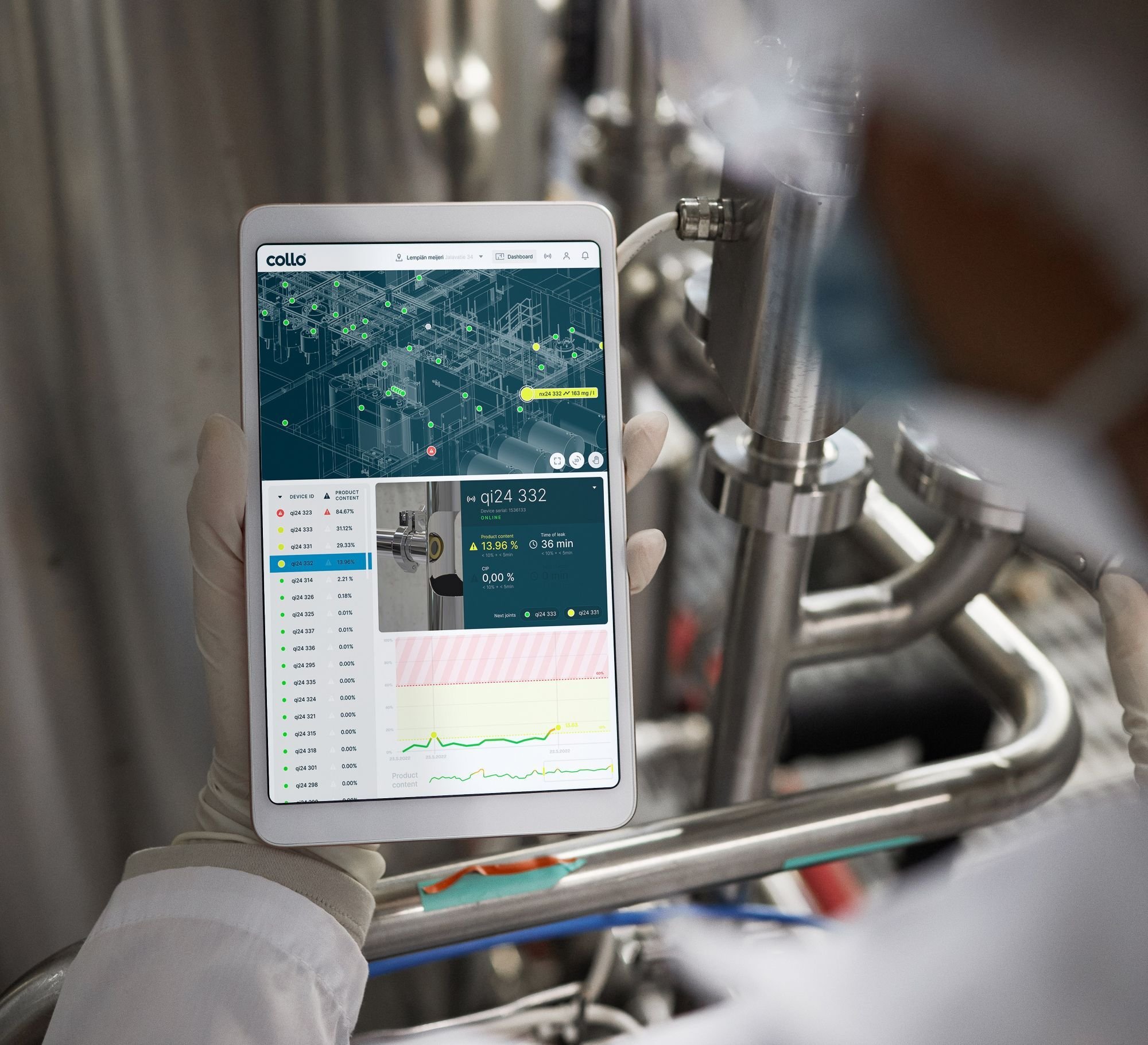
Collo is engineered for the real world: built to integrate effortlessly with your existing systems and validated to perform under real production conditions without disrupting operations. From milk and cream to cheese and yogurt, Collo technology is tested, traceable, and ready to go from day one.

Every Collo Analyzer goes through structured field trials, rigorous factory acceptance testing, and full compliance checks before shipment. This ensures that each device is reliable, compliant, and fully documented, ready to support audits and deliver consistent performance from the start.

  • No major infrastructure changes needed
  • Works with all dairy production lines
  • Built-in diagnostics, remote support & lifecycle traceability included
  • CE-marked and food-contact compliant (EC No 1935/2004, FDA)
Collo-diary-tablet-2025 crop small
Products

Different products for different dairy challenges:

FAQ

Frequently asked questions

Answers to the questions dairy teams ask us most. If yours is not here, contact us.

How much milk and cream does a dairy lose at product changeovers?

More than most plants measure. At every changeover the product and water interface is pushed out on a timer or a flow volume with a margin for error built in, so good product goes to drain before the valve switches, and cream is the costliest part of it. Valio's Joensuu dairy cut pushout losses by 92% on one cream line with Collo, keeping 260,000 litres a year out of the drain. Read the Valio case study.

How can a dairy cut CIP water and chemicals without new equipment?

By ending each CIP phase on the measured state of the liquid instead of a timer. A Collo Analyzer in the CIP return line shows when the pre-rinse has pushed out the product, when the caustic has done its work and when the final rinse is clean. Customers save 15 to 20% of cleaning water and time this way, and a European beverage producer cut CIP time by 23%. No new CIP equipment is needed: the analyser installs in the existing line and the control logic stays in your PLC.

What does a typical dairy plant lose each year, and what does it cost?

Collo's impact assessment puts the recoverable loss at a typical European dairy at about 750,000 litres of product and 5,500 m³ of cleaning water a year, plus the energy, chemicals and effluent charges that go with them. Lost product is paid for twice: once as raw material and again as organic load in wastewater treatment. The loss calculator turns your own volumes and prices into a figure for your plant.

Can we reduce these costs without a capital project?

Yes. The Collo Analyzer installs in existing lines during a planned maintenance window, deployment takes two to three weeks, and the analyser costs less to deploy than NIR or FTIR instruments. In our bottling reference case payback came in under 12 months. The savings come from running your existing CIP and changeover programmes on the state of the liquid, not from new process equipment.

How does Collo integrate with our PLC, SCADA or DCS?

Through standard industrial protocols: 4-20 mA, Modbus TCP and OPC UA. The Collo Analyzer connects to the Collo ECU edge unit, and Collo Signals delivers the signal, for example "CIP phase complete" or the product and water interface, into your automation. The control logic stays in your PLC and your existing timer-based sequence remains as a fallback. Installation is planned around existing maintenance windows, so production does not need to stop.

How is Collo different from a conductivity sensor for CIP phase switching?

Conductivity sees ions only, so it can confirm that caustic has arrived or left but cannot tell clean water from a rinse that still carries milk fat or protein, and it struggles with opaque liquids. The Collo Analyzer reads the whole liquid, so each phase can end when the line is actually clean. Many plants keep their conductivity sensors for chemical strength and add Collo for the product and water interfaces. Read the comparison guide.

How does Collo compare with NIR or FTIR analysers?

Collo is an inline process analyser, while NIR and FTIR are composition instruments that mostly sit at-line or in the lab. Collo reads the liquid every second, has no drift, needs no routine recalibration and costs less to deploy. NIR and FTIR give detailed composition for product certification but need regular calibration and a higher investment. The two work well together: Collo for real-time control and loss prevention, the lab for root cause and release. See the full comparison.

How long does deployment take, and can it scale across plants?

Two to three weeks from installation to first findings, during a planned maintenance window. The hardware, installation and reporting are the same on every line and in every plant, and Collo monitors the installed base remotely, so a dairy group can roll out plant by plant and benchmark sites on the same measurements. Start where the value is: high-flow points such as transfer lines, or valuable product such as cream, ideally both.

Which dairy liquids can Collo measure?

All of them, opaque or clear: raw milk at any fat content, skim and whole milk, cream, buttermilk and cultured products, yoghurt base, cheese milk, whey and permeate, protein concentrates, lactose solutions and ice cream mix. The measurement does not depend on light passing through the liquid, so thick cream and thin whey are read with the same analyser.

How does Collo support HACCP and food safety documentation?

With a timestamped measurement record of every production run and every cleaning cycle. Collo shows when each rinse stage is actually complete and keeps a liquid fingerprint record for each batch, which can feed your existing quality and traceability systems. These records support the documentation your HACCP, FSSC 22000, BRCGS, IFS Food or ISO 22000 programme already requires. The analyser's wetted parts comply with FDA 21 CFR 177 and EC 1935/2004, and the Varinline model is EHEDG EL Class I certified.

Contact us

Ready to optimise your dairy production?

Start your journey toward smarter decisions, reduced waste, and a greener dairy today.