<img height="1" width="1" style="display:none" src="https://www.facebook.com/tr?id=1446880727106160&amp;ev=PageView&amp;noscript=1">
Collo Analyzer

The inline analyzer that reads the whole liquid

Installed in the process line, the Collo Analyzer reads the complete fingerprint of the liquid in real time. Your plant runs CIP and changeovers on what is actually in the pipe, not on a timer.
The measurement

One analyzer, the complete fingerprint

Conventional inline sensors each measure one property: conductivity, Brix or turbidity. The Collo Analyzer contains Collo's patented RF sensor, which reads the complete fingerprint of the liquid and sees what single-parameter sensors miss.

  • Product and water interfaces: the exact moment product gives way to water at a changeover, and the moment a rinse is clean.
  • Dilution and composition changes: including the silent dilution that flow meters and mass balance report as a balanced plant. At one European dairy plant, flow meter errors were masking 1.3 to 2.28% dilution of the product.
  • Transparent, opaque or viscous liquids: from raw milk and cream to juice and concentrated cleaning chemicals.

The RF sensor measures Collo Permittivity and Collo Ion Viscosity, and the analyzer combines them into HydroGap: a single value for how far the liquid is from pure water, which sits at zero. It holds its reference without drift, so control limits stay where you set them.

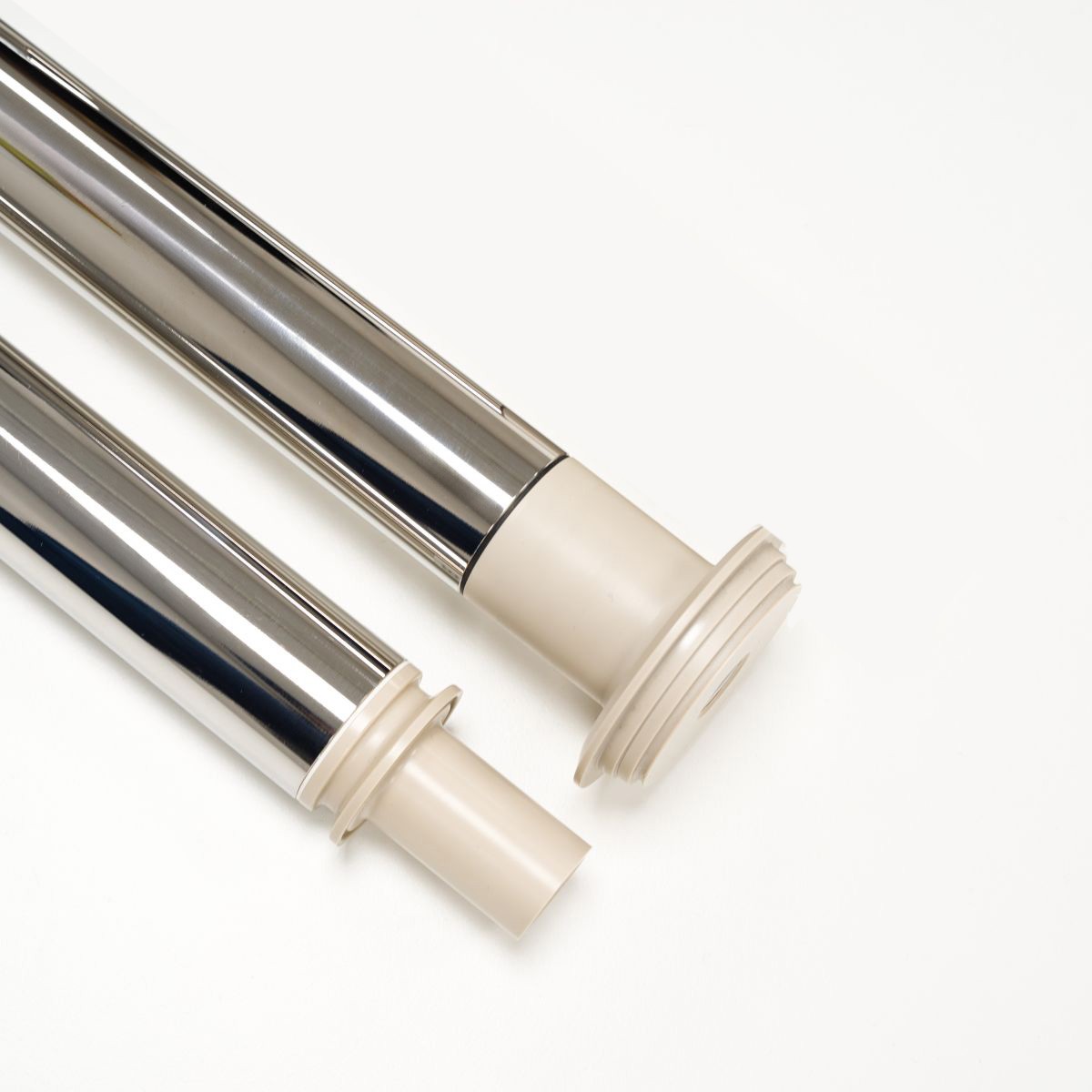
Collo Analyzer installed in a Varinline housing on a process pipe
Award-winning innovation

The innovation behind four awards in a year

DLG has awarded Collo a Gold Medal in the International FoodTec Award 2027, and at Alimentaria FoodTech 2026 Collo won the FoodTech Innova Award in the Sustainability and Circular Economy category. They follow the World Dairy Innovation Award 2026 at the and the World Beverage Innovation Award 2025.

All four recognise the same technology: the Collo Analyzer's patented RF measurement, which captures the complete liquid fingerprint and makes invisible losses visible and measurable.

Collo's four innovation awards: World Beverage Innovation Award 2025, World Dairy Innovation Award 2026, FoodTech Innova Award 2026 and DLG International FoodTec Award 2027 Gold
Applications

Where it goes to work

The Collo Analyzer is the measuring device of the Collo Platform. Collo Insights turns its data into findings per line, and Collo Signals sends it into your automation. The same analyzer serves every application:

  • Changeover (pushout) optimisation: the product/water interface is measured, so pushouts can end on the product, not on a timer. At Valio's Joensuu dairy, pushouts adjusted on Collo's interface analysis cut pushout losses by 92% on one cream line.
  • CIP optimisation: pre-rinse, caustic circulation and final rinse end when the line is clean. A European beverage producer shortened CIP time by 23% on one line. At a global soft drinks bottler, a six-week trial identified 17% less CIP water, or 4 million litres a year at scale.
  • Silent dilution detection: at raw milk reception and in cream, where water enters product unseen.
  • Mixing and concentration monitoring: following a product's state in real time with a concentration model.

Process lines and tanks in a dairy and beverage plant
Industries

One analyzer for dairy, beverage and liquid food

The same Collo Analyzer reads raw milk and cream, soft drinks and beer, and the sauces, dressings and plant-based drinks that defeat optical sensors.

Dairy

Every dairy liquid, opaque or clear

Raw milk, cream, cheese milk, whey and cultured products. Valio's Joensuu dairy cut pushout losses by 92% on one cream line with Collo.

Beverage and brewing

Carbonated, foaming or opaque

Soft drinks, syrups, juice, plant-based drinks and beer. A global soft drinks bottler found around 4 million litres of water a year in its CIP with Collo.

Specifications

Built for a hygienic process line

Key figures from the Collo Inline Analyzer technical specification (DOC-80-416). Two process connections: 1.5-inch Tri-Clamp (model F323) and Varinline type N (model FH324).

What the Collo Analyzer is rated for:

Process conditions

Up to 16 bar (Varinline type N) and 0 to 95 °C process temperature. Ambient 10 to 45 °C. IP65 with the M12 connector or cap fitted.

Hygienic design

EHEDG EL Class I certified (Varinline model FH324). Wetted parts in PEEK, sapphire and FFKM: FFKM and PEEK meet FDA 21 CFR 177, PEEK and sapphire meet EC 1935/2004. CE, RoHS and WEEE.

Measurement

Response time 1 second. Collo Permittivity and Collo Ion Viscosity combined into HydroGap, plus process temperature. Accuracy better than 0.1% of full span against the calibration reference; repeatability better than 0.05%.

Installation

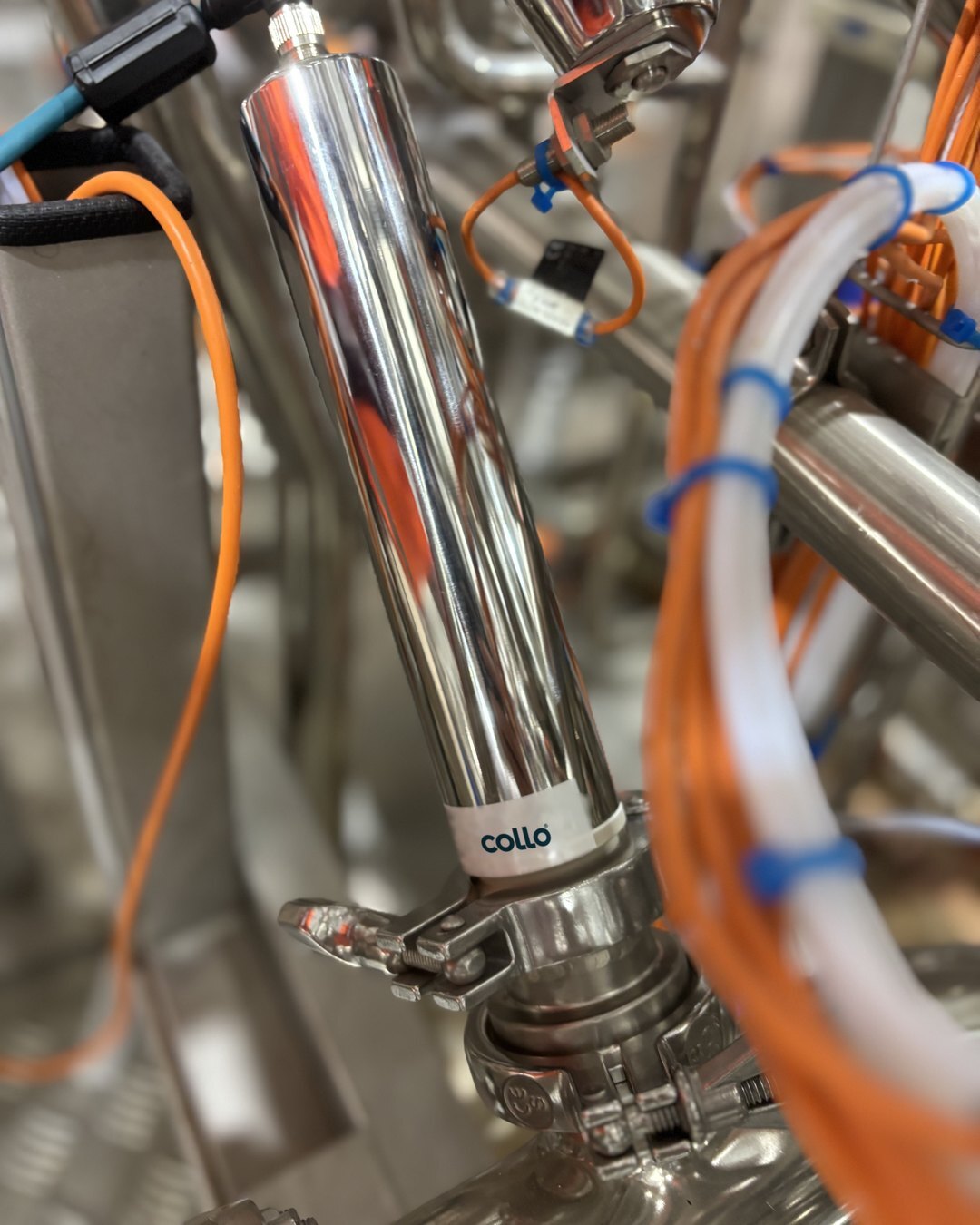
Inline, with a 1.5-inch Tri-Clamp or Varinline type N connection. Several installation positions are possible, and we choose the best one on your line together. Under 900 g.

Power and connection

Passive PoE, 12 to 48 VDC, under 5 W. M12 connector and cable runs up to 30 m to the Collo ECU edge unit.

Automation outputs

Through the Collo ECU and Collo Signals: 4-20 mA, Modbus TCP and OPC UA into SCADA, DCS or PLC.
Automation integration

Connects to the automation you already run

The Collo Analyzer talks to the Collo ECU edge unit over Ethernet. From there, Collo Signals delivers a live signal to your SCADA, DCS or PLC over 4-20 mA, Modbus TCP or OPC UA, and Collo Insights shows the data per line. Collo monitors the analyzers remotely and solves issues online.
Deployment

Deployed in weeks, not quarters

A Collo Analyzer goes in during a planned maintenance window, and a deployment takes two to three weeks.

  • Flexible installation: the analyzer fits inline with a standard hygienic connection, in several possible positions. We review the best location on your line together.
  • Start where the value is: high-flow points such as transfer lines, or valuable product such as cream, ideally both.
  • Low maintenance: no moving parts and no drift. Collo monitors the analyzers remotely, solves issues online and runs the software updates.
  • Same hardware, every line: Insights and Signals run on the same analyzers, so a plant can switch on real-time control area by area as the findings come in.
  • Protected technology: three granted patents on the RF measurement.
Collo-Analyzer-inline-vertical-2-linkedin-1080x1350
Zero-Loss Factory

The measuring device of the Zero-Loss Factory

A Zero-Loss Factory measures every CIP cycle and every product transition in real time, sees every loss event and stops every avoidable loss, across every site. The Collo Analyzer is where that measurement happens: the same analyzer counts water, energy, chemicals, product and yield at the plant, and Collo Insights and Collo Signals turn its readings into findings and control. Read about the Zero-Loss Factory.

FAQ

Frequently asked questions

If you still have questions, please feel free to contact us.
What does the Collo Analyzer measure?

It reads the complete fingerprint of the liquid in the pipe once a second: eight parameters of the liquid's response to Collo's patented RF sensor. The two main ones, Collo Permittivity and Collo Ion Viscosity, are combined into HydroGap, a single value for how far the liquid is from pure water. From that, the platform detects product and water interfaces, dilution, composition changes and the end of each CIP phase.

How does it find the product and water interface at a changeover?

As product gives way to water, the fingerprint changes continuously. The Collo Analyzer follows that change in real time, so the interface is found on the liquid itself rather than estimated from flow and time. Valio's Joensuu dairy used this to cut pushout losses by 92% on one cream line.

Does it work with opaque, viscous or foaming liquids?

Yes. The measurement does not depend on light passing through the liquid, so it works for raw milk, cream, cheese milk, syrups, sauces, plant-based drinks and other liquids that defeat optical sensors.

How does it integrate with our existing automation?

The analyzer connects to the Collo ECU edge unit over Ethernet. Collo Signals then delivers the signal to your SCADA, DCS or PLC over 4-20 mA, Modbus TCP or OPC UA. Control logic stays in your PLC, and your timer-based sequence remains as a fallback.

Is it food-contact compliant and hygienic?

Yes. The wetted parts are PEEK, sapphire and FFKM, compliant with FDA 21 CFR 177 and EC 1935/2004. The Varinline model (FH324) is certified to EHEDG EL Class I. The analyzer is rated to 0 to 95 °C and up to 16 bar (Varinline type N) or 10 bar (1.5-inch Tri-Clamp), IP65, and carries CE and RoHS marks.

Does it drift or need recalibration?

No. The RF measurement holds its reference, so there is no drift to correct and no routine recalibration. Collo monitors every analyzer remotely and maintains it as part of the platform.

What are its limits?

It is not a lab assay for a single analyte: it reads the whole liquid and follows concentration with a model rather than reporting a sugar, pH or alcohol value directly. It is not for highly corrosive liquids or strong solvents. Ambient temperature at the installation point should stay between 10 and 45 °C.

How does it compare with a conductivity sensor for CIP?

Conductivity only sees ions, so it cannot tell clean water from a rinse that still carries product, and it struggles with opaque liquids. The Collo Analyzer reads the whole liquid, so each CIP phase can end when the line is actually clean. Customers save 15 to 20% of cleaning water and time this way.

How long does deployment take, and does it scale across plants?

Two to three weeks from installation to first findings, during a planned maintenance window. The hardware, installation and reporting are the same on every line and in every plant, and Collo monitors the whole installed base remotely, so a group can roll out plant by plant without a new project each time.

Contact us

Ready to see what your line is really doing?

Talk to us about a Collo Analyzer deployment on your highest-value line.